Dr. Amy Lonetree is a citizen of Ho-Chunk Nation. She is a professor of history and her work focuses on the representation of Native Americans in history, national and tribal museums, and art. Her book, Decolonizing Museums: Representing Native America in National and Tribal Museums (First Peoples: New Directions in Indigenous Studies) explores the way native peoples are represented in museums and the impact this has on native people.
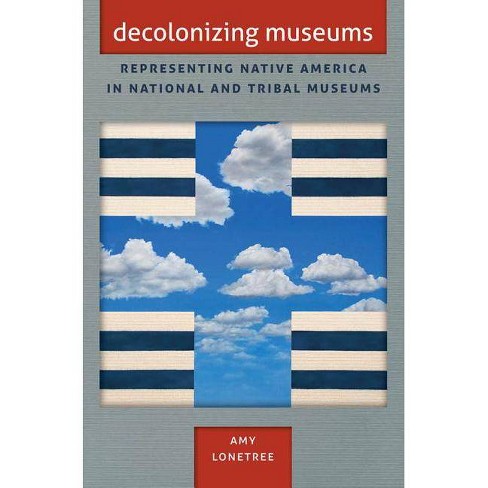
Dr. Lonetree explains how it is important to have Native Peoples as collaborators in the development of exhibits. As well as, to have museums dedicated to and run by Native Peoples. History does not belong to one person or one group. Instead, it is composed of all of us. We need more than the voice of colonizers. There is also value in recognizing that there is more to Native Peoples’ history than that of colonization. Focusing only on one perspective in addition to focusing only on one part of history isn’t just or accurate.
Focusing on the Smithsonian’s National Museum of the American Indian, the Mille Lacs Indian Museum in Minnesota, and the Ziibiwing Center of Anishinabe Culture and Lifeways Dr. Lonetree is able to provide insight into the various degrees of Native Peoples involvement in exhibitions. These are all examples, to the varying degrees, of how Native Peoples are being given more influence on exhibits. This allows stereotypes to be challenged, and a fuller representation of colonization to be told.
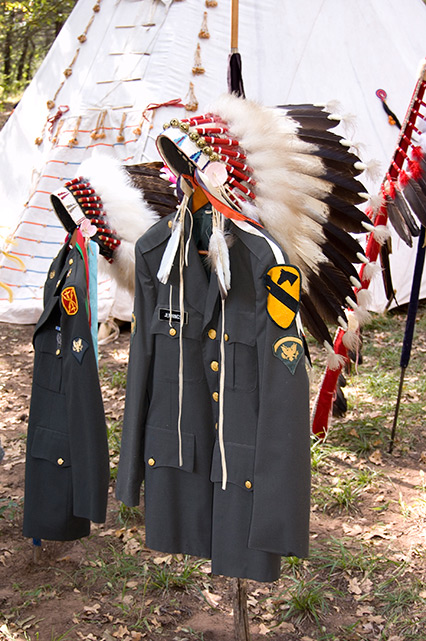
After exploring each website there were things I enjoyed about each. However, a few items stood out to me. One was the Smithsonian’s exhibit on Patriot Nations: Native Americans in Our Nation’s Armed Forces. The site states, “Native peoples have participated in every major US military encounter from the Revolutionary War to today’s conflicts in the Middle East, serving at a higher rate in proportion to their population than any other ethnic group.” I find that interesting and wondered why?
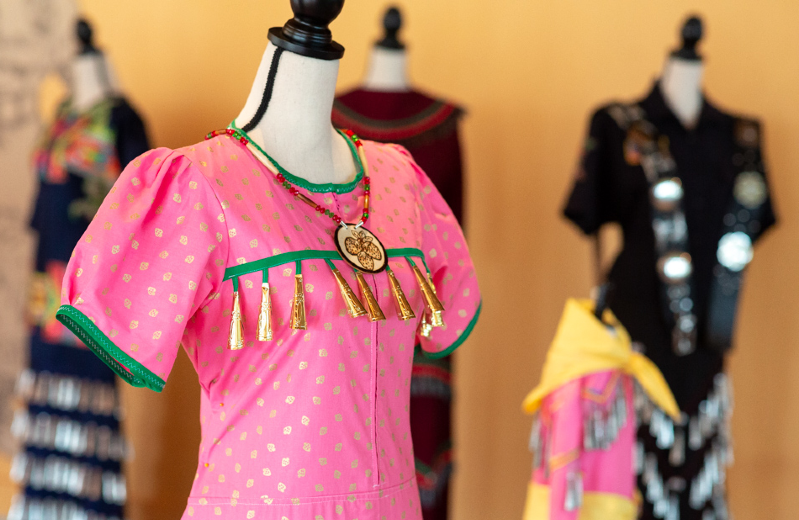
I also thoroughly enjoyed the Mille Lacs Ojibwe Jingle Dress Dance exhibit at the Mille Lacs Indian Museum and Trading Post website. The dresses are beautiful and the history of the dress and dance is interesting.
The Ziibiwing Center did not have any online exhibits but they mention what exhibits are available including a Plant Walk exhibit that has over 40 different plants that are traditionally used by the Anishinabek. I can already tell I like this exhibit without having to see it. I like it because it is a unique take on history and culture sharing. It also breaks the mold for many stereotypes of Native Peoples.
Works Cited:
Lonetree, Amy. Decolonizing Museums: Representing Native America in National and Tribal Museums. University of North Carolina Press, 2012.
“Museum.” Minnesota Historical Society. Accessed October 1, 2020. https://www.mnhs.org/millelacs/activities/museum.
“Patriot Nations: Native Americans in Our Nation’s Armed Forces.” Patriot Nations: Native Americans in Our Nation’s Armed Forces | National Museum of the American Indian. Accessed October 1, 2020. https://americanindian.si.edu/explore/exhibitions/item?id=959.
“Permanent Exhibit.” Ziibiwing- Exhibits. Accessed October 1, 2020. http://www.sagchip.org/ziibiwing/exhibits/index.htm.
 Archives Of My Mind
One response to “Decolonizing Museum”
I do not have an answer. However, I find it very interesting that Native Americans serve in the military at a higher rate than other ethnic groups and I am sure there is more than one reason for this. It goes to show that dividing people into groups based on race means very little in the long run. Humans are humans no matter what their background, color, sexual orientations, sex, etc. However, we cannot deny the culture that shapes people. Culture plays a bigger role in determining an individuals beliefs and ethic than DNA does. I am curious (and this is just me brain storming) if Native American tribes put more emphasis on serving others or perhaps on freedom, considering their past experiences? Of course, each tribe is not alike and has their own cultures but it is interesting to think about. I would definitely like to learn more about this subject. Also, I love the pictures you included!
LikeLike