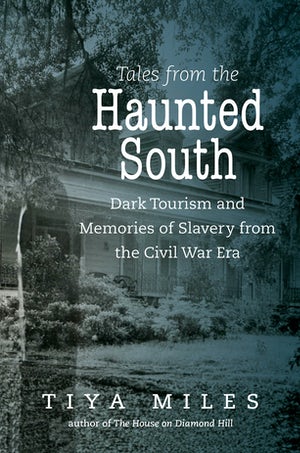
Tales from the Haunted South Dark Tourism and Memories of Slavery from the Civil War Era by Tiya Miles is an exploration of the popularity of ghost tours in the Southern United States. To understand why these stories are so popular and what they say about history Miles visits various cemeteries, plantations and manors. Tiya Miles sets out to understand the history behind the ghosts, and what these stories say about American culture.
Miles covers 3 different ghost tours. The story of an abused slave girl, Molly who was murdered after an affair with her master, Francis Sorrel at the Sorrel-Weed House. Molly turned out to be a completely fictional character in a story that is equally fictional. Additionally, it is slanderous towards the very real, Francis Sorrel and his wife, Matilda. Do we gain anything from this lie? Afterall, while Molly is fictional there could be a real life equivalent, right? Certainly, there were true stories worthy of being told. Miles then covers the murderous slave owner, Madame Lalaurie and her role in popular culture.

Madame Lalaurie tortured and murdered her slaves in her home in New Orleans. It is the ghost of these tortured slaves that haunt the Lalaurie home in the French Quarter. Miles points out that Lalaurie was also a main character on the hit tv show American Horror Story leaving one to wonder just how far into American culture do these ghost stories go or does their reach span far beyond a tour in the south? Are ghost the only part of dark tourism? Certainly, Madame Lalaurie isn’t an average slave owner from the south but a foreign (French) serial killer, right? Miles points out that a common theme of these ghost tours is to make the abuser not an American, but a foreigner.

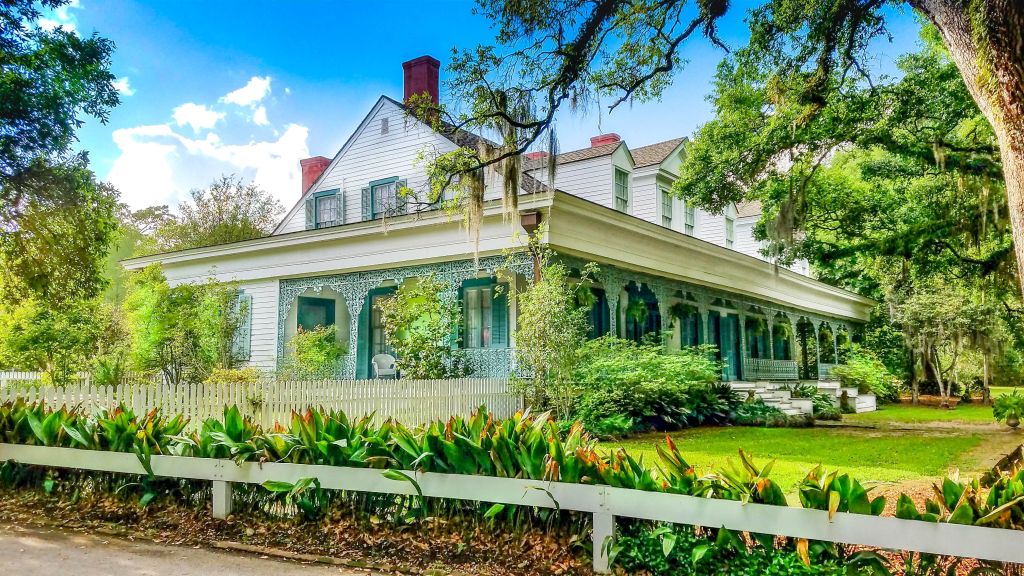
The 3rd and final ghost tour Miles covers is the River Road historic area. Several plantations are explored in this tour, the Myrtles Plantation, Frogmore Plantation, Ormond Plantation, and Loyd Hall. In many of these stories “no one comes out on top, except, that is, for the white male slaveholder, who never actually appears in these tales but remains, instead, an innocent man somewhere offstage” (Miles, 79). This leaves the female cast to take the blunt of the negativity. These characters play various roles including abusive and jealous mistress, voodoo queen, or seductress. This leads to further exploitation of African religious beliefs as voodoo and hoodoo are often at the core of these ghost stories.
Miles is respectful of all those who believe in ghost and the varying beliefs. She does not dismiss historical fiction outright or a museum’s struggle to stay relevant by embracing ghost tours. Instead, she calls for these ghost tours to be better and to do better. To tell a story true to the very real impact that slavery had and still has on so many. Ultimately, Miles compassionately understands the value ghost tours have in helping a museum bring in revenue and even the value they have for the public to engage the past. Ghost stories have a place in talking about history, but nonetheless Miles calls for “-…our ghosts be real, let our ghosts be true, let our ghost carry on the integrity of our ancestors” (Miles, 132).
“Ghost” by Jacqueline Woodson
In downtown Greenville,
they painted over the WHITE ONLY signs,
except on the bathroom doors,
they didn’t use a lot of paint
so you can still see the words, right there
like a ghost standing in front
still keeping you out.
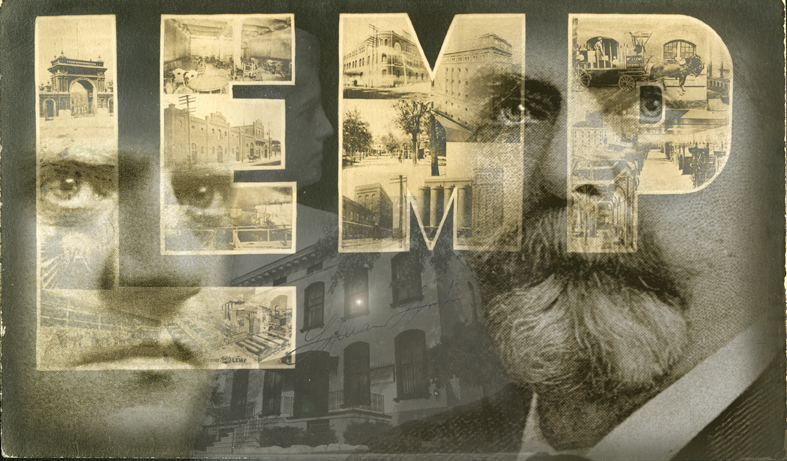
https://www.lempmansion.com/hauntedhistory.htm
Works cited:
Miles, Tiya. Tales from the Haunted South: Dark Tourism and Memories of Slavery from the Civil War Era. Chapel Hill: The University of North Carolina Press, 2015.
 Archives Of My Mind
One response to “Tales From the Haunted South”
I also liked how she did not completely disparage the idea of the historical narrative ghost tours can give the public, she just wants the narrative to be in the control of who it is affecting most. I particularly liked her comments about how her Halloween tour at the plantation with a Black guide gave her hope about how ghost tours can work towards approaching ghosts and enslaved people in a way that is respectful and lets them have a voice through their ‘ancestors’ rather than fitting them into stereotypes and framing stories in ways to make them more comfortable for white people.
LikeLiked by 1 person