“History is more or less bunk. It’s tradition. We don’t want tradition. We want to live in the present, and the only history that is worth a tinker’s damn is the history that we make today.” (Henry Ford, Chicago Tribune, 1916).
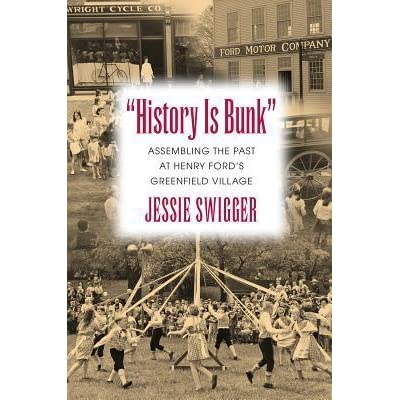
Swigger argues in ‘History is Bunk: Assembling the Past at Henry Ford’s Greenfield Village that “Ford’s interest in the past, and an examination of Greenfield Village after 1947, also helps settle debates about its place in broader histories of the preservation movement and history museums.” (Swigger, 8). Swigger also claims that the location of Greenfield Village in Detroit and the reputation of Detroit “influenced the dialogue between administrators and their audiences.” (Swigger, 8). Furthermore, Swigger looks at Greenfield Village from multiple points of view. The perspectives of Henry Ford, visitors, surrounding community, and current leaders are all taken into account.

To support her argument Swigger uses a ton of archival records to make her point. This is sufficient, because she is able to point back to direct evidence. Additionally, she is able to use various different types of evidence. Everything from a telephone interview to visitor responses are used to illustrate her points. It is this dialogue that really brings out the nature of the museum and how it has changed over time. “Staff engaged in historical research with an eye toward exposing histories that were uncomfortable and even painful… the new map illustrated the relationships that allowed early industrial America to flourish and the hardships that previous generations faced.”(Swigger, 167) The result is an expansive historical overview of Greenfield Village. Furthermore, it is an insightful take on the role museums play in constructing history.
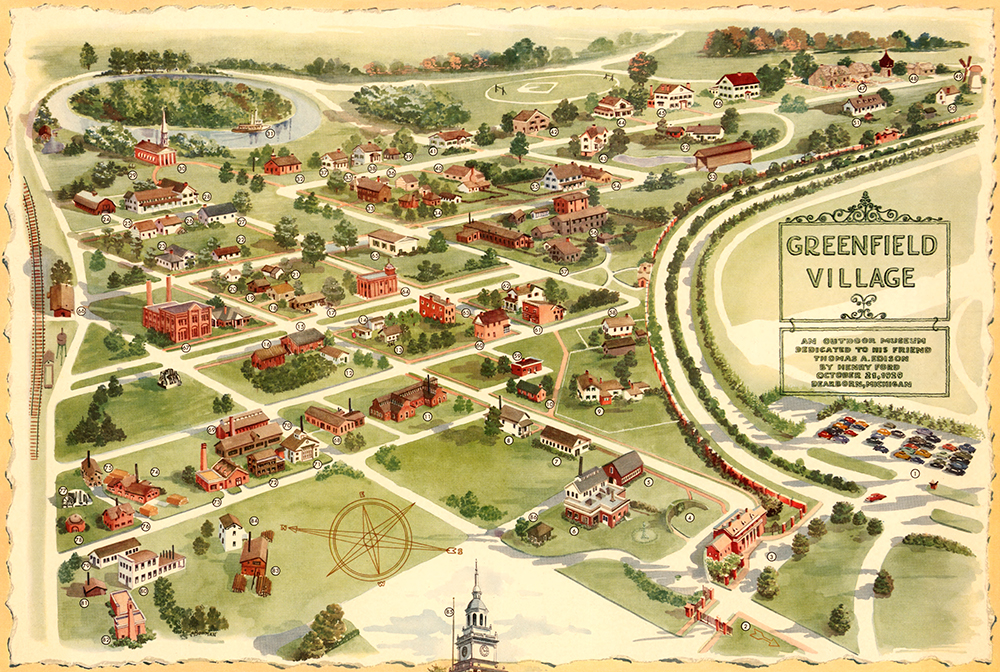
I do have a few additional questions around “from history museum to history attraction”. I understand that Greenfield Village used theme-park attractions to guide some of the updates. However, what does this do for the museum? Is it helpful to integrity of the museum? Hurtful? Does it tie back to Ford’s original comment about history being more or less bunk?
 Archives Of My Mind
3 responses to “History is bunk”
I like that you added the questions that were raised for you by the time you finished the book. I had several of the same questions pop into my head.
I think the theme-park attraction bit was used as a money making tool to get visitors to come see Greenfield Village and to provide an entertainment factor for them. I think that financially it helps the bottom line but doesn’t necessarily add anything to the museum, historic aspect of the site.
LikeLiked by 1 person
I would like to start with your question of why the theme park additions. I do not know the exact time frame, but let us say the 90s, when science centers came into vogue these museums included IMAX theaters and other attractions. Having worked in a science center for many years the balance has always been how do you mix education and natural history spaces with fun and revenue generation. The department I ran has always taken a back seat when it come to renovation and major updates in favor of those revenue generating theme park attractions. Unfortunately in the end for a lot of institutions including Greenfield Village, revenue generation wins out. Again, love the pictures.
LikeLiked by 1 person
I agree that the iMAX stuff was added to stay relevant and bring in money for the museum. I guess I just don’t think of iMAX as being a theme-park attraction. I see it more inline with theater and tv. Now the train station I guess is kind of ride, but still…I just wasn’t sold are the argument that it is inline with theme park vibes. I wonder how the viewer engagement with the iMAX addition compares to viewers of a more traditional documentary?
LikeLike