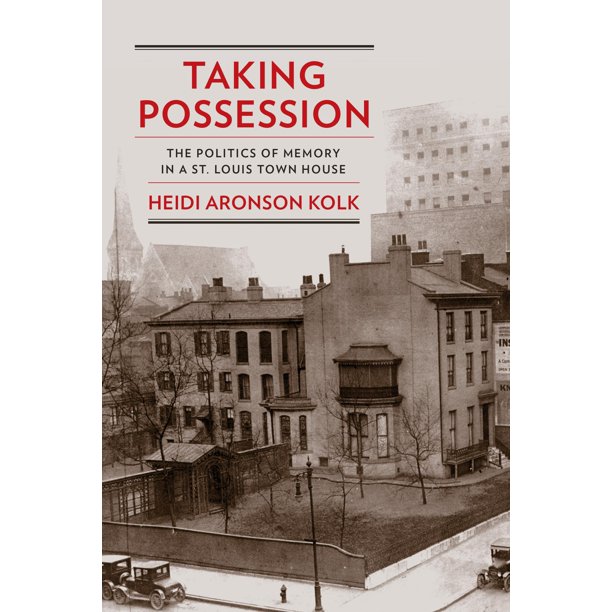
In her book Taking Possession: The politics of Memory in a St. Louis Town House Heidi Aronson Kolk argues that there are intentional acts encouraging memory and forgetting as well as nostalgia and shame. She makes this point by demonstrating the various pinpoints in time and artifacts, in chapter form, that impact the memory surrounding the Campbell House Museum. She breaks the book down into the burglary, the neighborhood, caretaking, the auction, the opening, the receipt book, the dinner party, two buckskin suits, and restoration.

I especially liked her inclusion of the homeless in St. Louis and the way St. Louis treats its homeless population. “While rarely if ever responsible for spikes in crime in the area, the homeless have been easy targets for myriad downtown ‘clean-up’ efforts in recent years, including their forcible removal from nearby Soldier’s Memorial Park…” (Kolk, 3). It is interesting the connection she makes between St. Louis citizens blaming the homeless for the destruction of a window on a historic home. It wasn’t just a vandalism, but a “reminder of city problems such as crime and homelessness, and disregard for public property” (Kolk, 191). It is fascinating how one act can pull forth such a strong emotion about a historical issue and remind an entire city of the shame they are avoiding by continuing to ignore the issue.
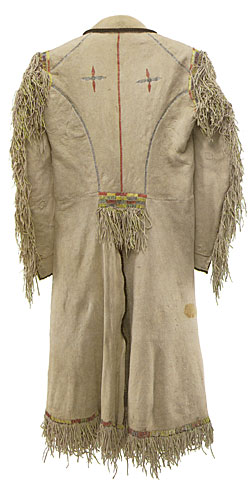
Additionally, this sparks a debate over preservation and “a return to intactness”, and reminds me of the book History is Bunk by Jessie Swigger. Both books touch on this idea of originals verse replicas and question what exactly are we restoring? This can be further seen in the Two Buckskin Suits chapter. Kolk questions the display of two “Indian Suits”, “St. Louis’s early history as a ‘frontier city’ was a kind of remote abstraction, as evidenced by its decision to display the suits alongside Virginia’s satin and silk gowns…” (Kolk, 135). Whose history are we protecting here? What are we saying about other histories? Are there other histories, or just one history and we intentionally forget the hard truth in favor of nostalgia?

Below is a PDF copy of the newspaper article
 Archives Of My Mind
One response to “Taking Possession”
Public memory, nostalgia, civic pride. I have given these concepts are hard look this year. What are we supposed to take pride in and be nostalgic for? Which history are we to support? St. Louis is a city wrapped up in civic pride and its own virtues. People take pride in being a once major industrial city, a railroad hub, one of the largest cities in the nation, the former center of the fur trade and exploration, heck even once a major airplane hub and Fortune 500 hotbed. St. Louis was once voted the greatest sports city in America. Civic pride. None of the things I mention are currently true and have not been the case for some time. It seems the Campbell House is a case study for how this city holds on to things that were once precious and a vital piece of its identity.
LikeLiked by 1 person