During the 1960s- 1980s many grassroots organizations popped up in St. Louis in an attempt to preserve the historic integrity of neighborhoods. The Landmarks Association of St. Louis, and Lafayette Square Restoration Committee are a few of these organizations. Additionally, the Missouri Historic Preservation Tax Credit program encouraged preservation in St. Louis. Despite this Old North St. Louis seems to be overlooked and historic locations are often torn down instead of persevered.
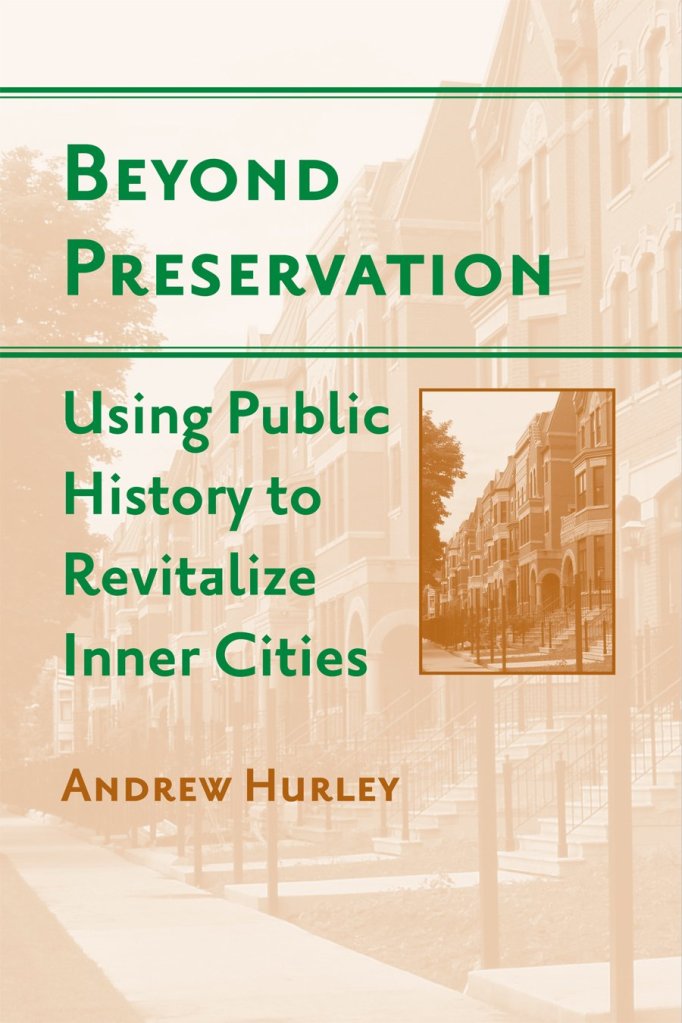
The University of Missouri- St. Louis Partnered with a local restoration group to form the Community Outreach Partnership Center (COPC). “One of the primary objectives of the Old North Neighborhood Partnership was to avoid gentrification and the displacement of low-income families” (68, Hurley). In many ways this was successful, but there were also some failures and I think it is interesting how the author glazes over some of the failures. (However, I am sure in other chapters of Beyond Preservation Hurley will go into more detail.)
Choosing to focus on the lack of historical information gathering instead of the obvious social disparities that still exist seems a bit like ignoring the truth of the situation. It is awesome that students and locals alike were allowed to excavate. It is great that the findings were put into a public museum. However, Hurley points out that community involvement was still low due to poverty, but what did they expect? Poverty isn’t the result of low moral or a disinterest in one’s community. Coming to an impoverished community and asking them to help preserve it isn’t going to help.
Overall, I liked the idea of the project, but I wish it would have focused more on empowering the community and giving them a reason to be interested in preserving their neighborhood. What is preservation really worth if it lacks any benefit to the community it is being preserved for? How do we make preservation a priority to impoverished communities that have bigger issues to focus on?
 Archives Of My Mind
2 responses to “An Experiment in North St. Louis”
i enjoyed your critique of the book. i agree that just asking people to help and expecting help in preserving is a lot to expect. the majority of the people do not live in poverty because they want to. most impoverished Americans are that way as a result of the system. when it come to preservation, most people want to preserve their life not a building. my post focused on the overall them of the book and public history, i appreciate your stance on seeking empowerment and a realistic approach to preservation. relevance is always the key in this course.
LikeLike
I also read chapter 3 and I think you bring up very good points and ones I had not considered. Relevancy is something we must strive to find in order to receive stronger community engagement. In regards to trying to make preservation more of a priority to impoverished communities, it is important that people see the importance of individual choices and how that has influenced the past. The social relations and ethnic background of the neighborhood was formed by individual choices, often as a result of the intolerance and prejudice of previous systems. Proceeding with historic investigation alongside these communities through openness and cooperation however shows them that their opinions and choices matter and can affect the wider well-being of the community. It is of course more complex than this though.
LikeLike